India Invites Global Capital to Power Its Clean Energy Leap at Davos
At Davos, Union Minister Pralhad Joshi positioned India as a resilient, scalable and investment-ready clean-energy powerhouse, urging global investors to partner its rapid transition.
 Chetan R @ vēritās news desk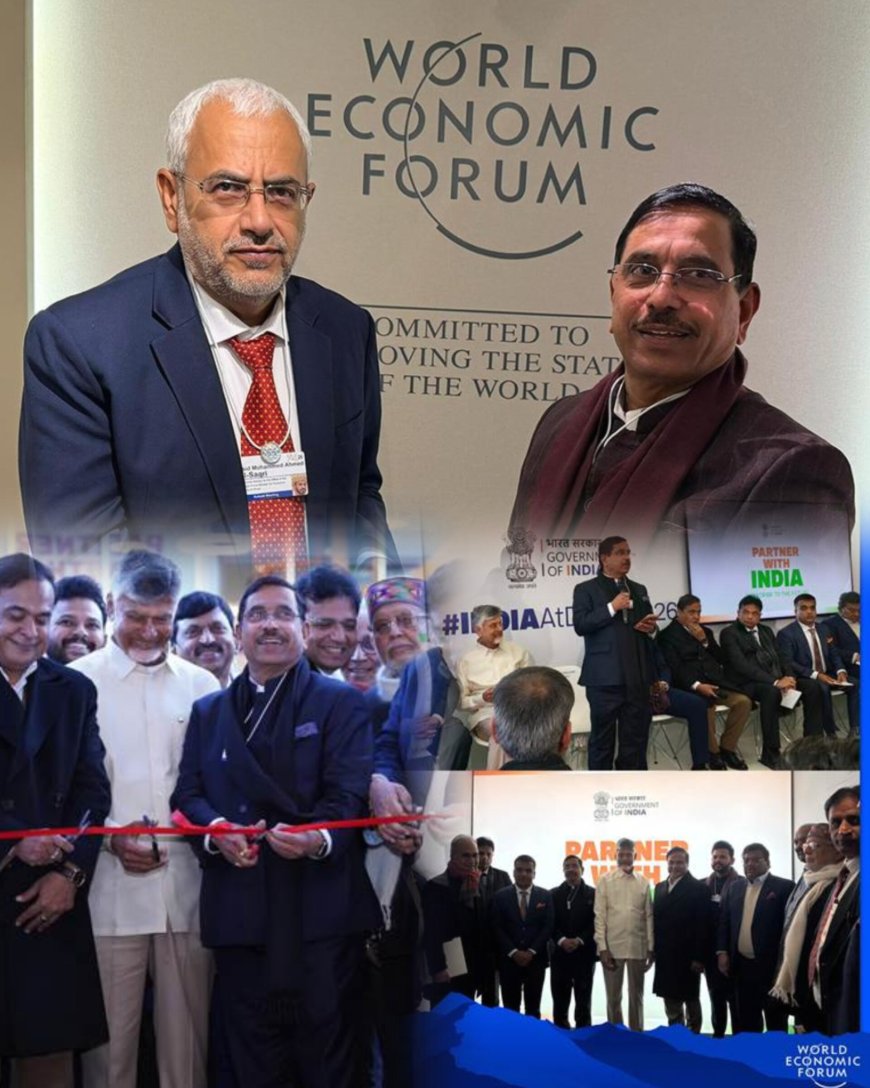
Davos | Jan 20 :
At the World Economic Forum Annual Meeting 2026 in Davos, Union Minister for New and Renewable Energy Pralhad Joshi made a strong pitch to global investors, asserting that the future of the global energy transition depends on resilient infrastructure built at scale and backed by patient capital.
Addressing the session “Resilient Infrastructure for Growth”, Joshi said India has demonstrated that scale and system resilience can advance together. Under the leadership of Prime Minister Narendra Modi, India has achieved 267 GW of non-fossil fuel capacity as of December 2025 and remains firmly on track to meet its 2030 clean-energy targets.
He highlighted that India’s progress is anchored in robust policy frameworks, domestic manufacturing strength, grid modernisation, energy-storage deployment, and emerging pathways in geothermal and nuclear energy. Emphasising the role of blended finance and long-term capital, the Minister called for deeper collaboration between governments, private investors and multilateral development banks to ensure an inclusive global transition.
Sustainability as an Economic Imperative
Delivering the keynote at the roundtable “Delivering Sustainability at Scale: Pathways for Global Transformation”, Joshi said sustainability has moved from the margins to the core of economic competitiveness and growth. The real challenge, he noted, is not whether the transition should happen, but how it can be delivered at scale, at speed and in an economically strengthening manner.
Reiterating India’s commitment to net-zero emissions by 2070, the Minister said the country’s transition philosophy is guided by Vasudhaiva Kutumbakam—One Earth, One Family, One Future. India, he stressed, views sustainability as a strategic transformation of society and the economy, with renewables forming the most reliable and affordable pathway to future growth.
High-Level Bilateral Engagements
On the sidelines of the Annual Meeting, Joshi held a series of strategic bilateral meetings to deepen international clean-energy cooperation.
In discussions with H.E. Dr. Said Mohammed Ahmed Al Saqri, Economic Advisor at the Office of the Deputy Prime Minister for Economic Affairs, Oman, the focus was on collaboration in solar, wind, green hydrogen and energy storage, including projects suited to arid and desert conditions. Talks explored joint manufacturing and export of solar modules and electrolysers, investments in renewable-powered hydrogen hubs, port-based export infrastructure, and cooperation under the International Solar Alliance and One Sun One World One Grid initiative, leveraging the India–Oman CEPA.
The Minister also met H.E. Mr. Maxime Prévot, Deputy Prime Minister and Minister of Foreign Affairs, European Affairs and Development Cooperation of Belgium, reaffirming the strength of the India–Belgium partnership built on predictability, trust and shared democratic values.
A constructive meeting was also held with H.E. Subaih Abdul Aziz Al-Mukhaizeem, Minister of Electricity, Water and Renewable Energy of Kuwait, focusing on investment opportunities in India’s renewable-energy sector.
Global Investors Signal Interest
Engaging global capital, Joshi met Charles Emond, President and CEO, and Sarah Bouchard, COO of La Caisse, encouraging the scaling up of long-term climate and clean-energy investments in India. He invited the institution to expand its “Partner with India” initiative and align with its USD 400 billion climate-action investment commitment by 2030.
In another key interaction, Joshi met Juvencio Maeztu, CEO and President of Ingka Group, which operates IKEA retail. The group expressed strong interest in entering India’s renewable-energy space, particularly in solar, wind and hybrid solutions, with the Minister encouraging a scaled-up presence leveraging India’s stable policy ecosystem.
India Pavilion Showcases the ‘India Story’
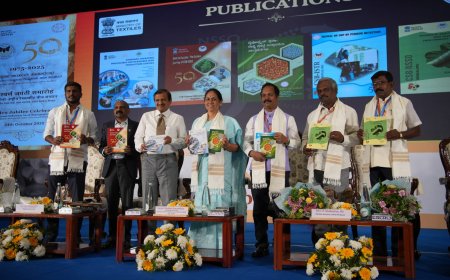
Shri Joshi also attended the inauguration of the India Pavilion at Davos alongside Union Ministers and Chief Ministers, including Andhra Pradesh Chief Minister N. Chandrababu Naidu, Assam Chief Minister Himanta Biswa Sarma, Union Civil Aviation Minister Ram Mohan Naidu, and Karnataka Minister for Commerce & Industries and Infrastructure M.B. Patil. On the occasion, he launched a Green Investment Handbook titled The India Story.
The Pavilion projects India as a reliable, competitive and future-ready investment destination, highlighting reform-led growth, regulatory predictability and strengths across manufacturing, infrastructure, renewable energy, technology and innovation—aligned with the vision of Viksit Bharat 2047.
Concluding his engagements, the Union Minister said India’s ability to accelerate growth even amid global slowdowns underscores its emergence as a trusted global partner, offering policy certainty, stable returns and long-term opportunities for sustainable value creation.